1934 · Omega
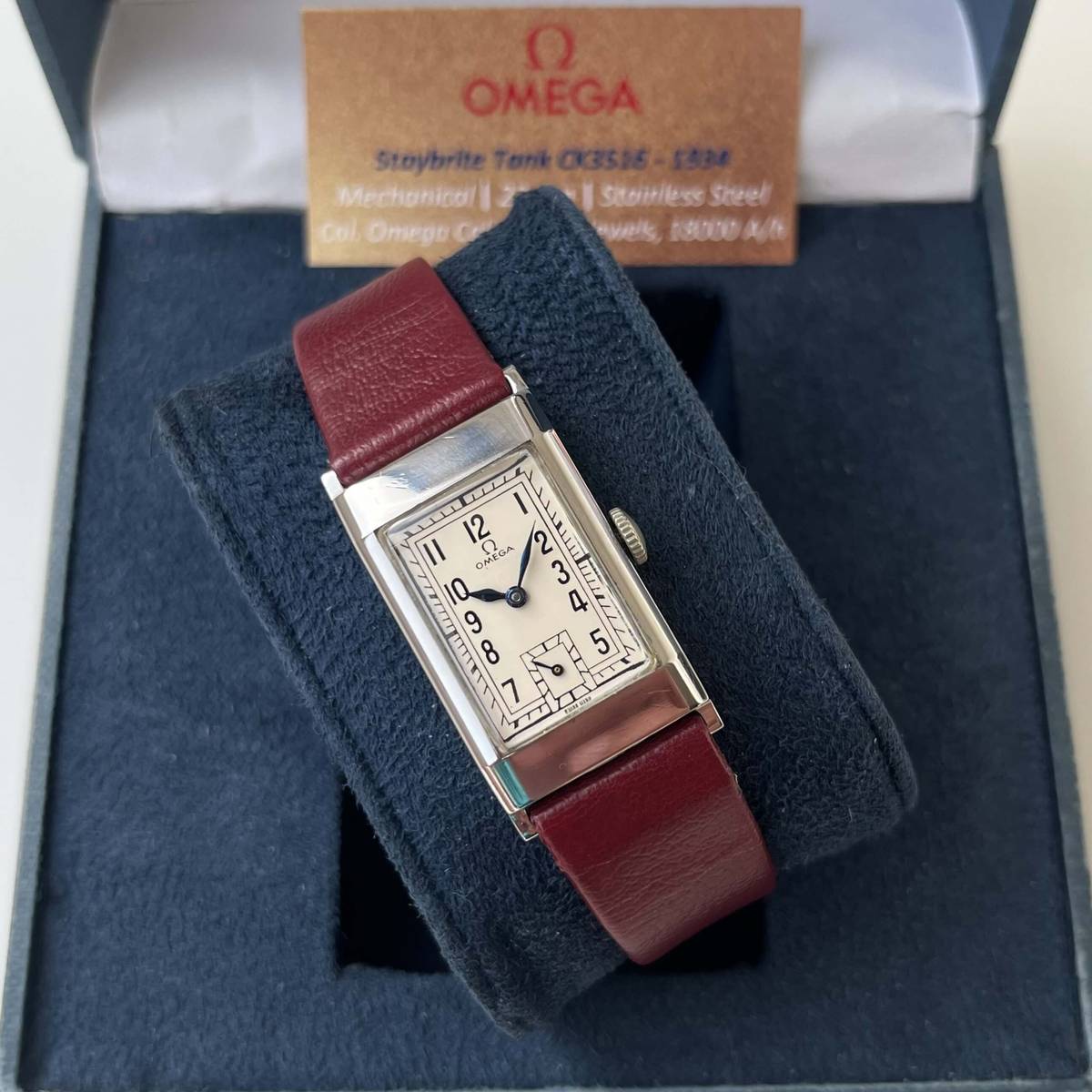
1934 Omega StayBrite "Tank" CK3416
CK3416
- Diameter
- 23 mm
- Movement
- Mechanical Winding
- Calibre
- Omega Cal. T17
- Water res.
- Water Resistant
Photographs
35Shown in the order they were catalogued.
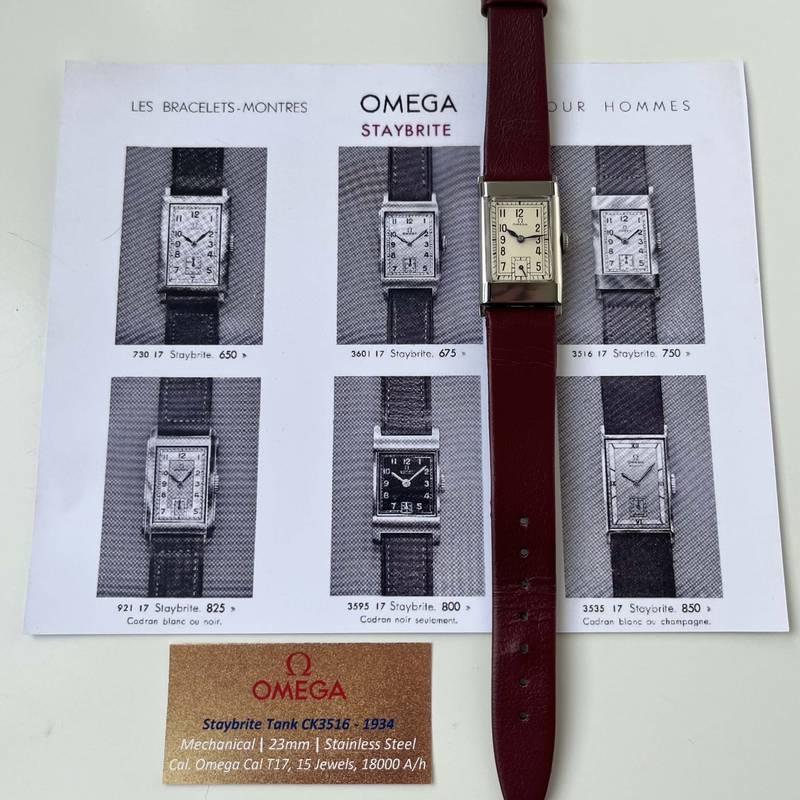
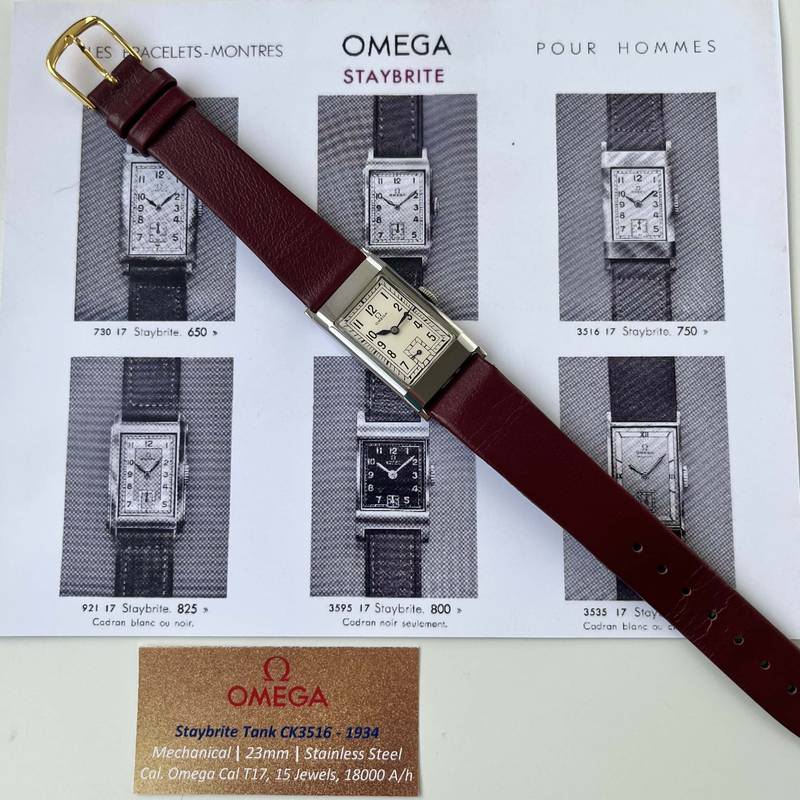
Features
Features
Mechanical
A watch powered by a traditional mechanical movement, typically requiring manual winding to operate, without the use of batteries or electronic components.
Small Seconds
A sub-dial showing the seconds hand separately from the main dial, usually placed at 6 o'clock position.
Model
- Brand
- Omega
- Series
- Staybrite
- Catalogue Reference
- CK3416
- Movement Type
- Mechanical Winding
- Production Year
- 1934
- Style
- Casual Watch
Case
- Diameter
- 23 mm
- Thickness
- 7 mm
- Material
- Stainless Steel
- Water Resistance
- Water Resistant
- Finishing Details
- Polished
- Bezel
- Without Bezel
- Crown Type
- Push/Pull
- Crystal
- Acrylic
- Caseback
- Without decoration
Dial
- Color
- White
- Dial Markers
- Arabic Numerals
- Finishing Details
- None
- Luminiscent Indexes
- None
- Calendar
- Without Calendar
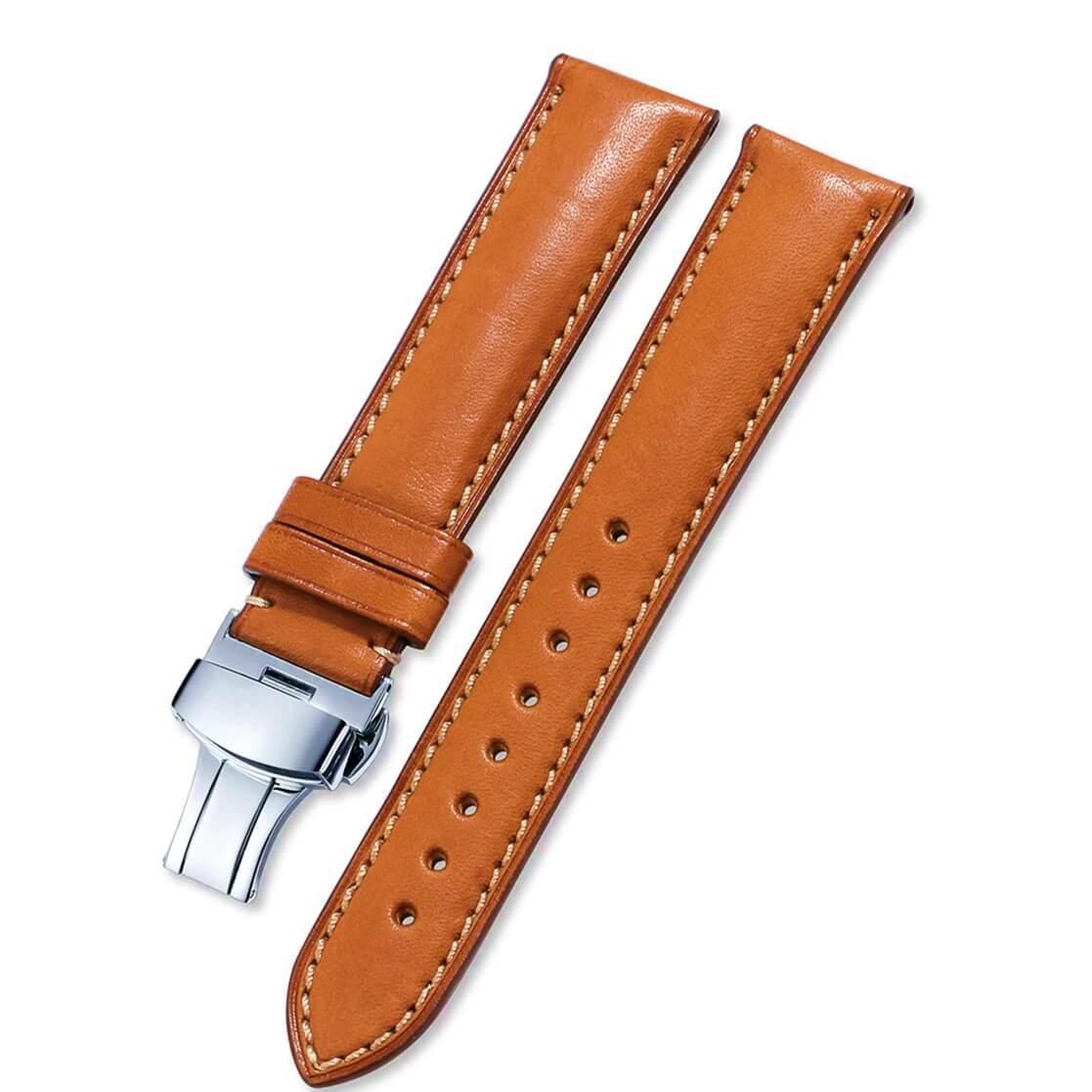
Bracelet
- Material
- Leather
- Buckle Type
- Standard Buckle
- Width
- 16 mm
- Color
- Red
Movement · Omega Cal. T17
- Manufacturer
- Omega
- Model
- Cal. T17
- Type
- Mechanical Winding
- Jewels
- 15 (Fifteen) Jewels
- Frequency
- 18000 A/h
- Reserve
- 60 Hours
- Functions
- Hours, Minutes, Sub Seconds at 6 o'clock
Early Omega movement designed specifically for use in rectangular and other shaped cases. Protected by a metal casing. Designed by Charles Perregaux under the direction of Henri Gerber. The "T" designates this calibre's tonneau or barrel shape, and "17" its maximum width in millimetres (the calibre's length being of 24.5 mm). With a 60-hour power reserve, the T-17 had the largest power reserve of all the mechanical wristwatch movements made by Omega until the calibre 8500 of 2006! This achievement was realised thanks to an enlarged barrel which rotated slower and a gearing ratio that allowed a considerable increase in the duration of the run, leading to outstanding stability for the normal 24-hour daily rate separating consecutive windings. The T-17 was produced in more than 167,000 pieces up to 1943.
Sale report
- Hammer price
- €780
- Date
- 17/08/2025